Do you picture waking up to Atlantic sunrises or do you prefer extra space, privacy, and a quick drive to the beach instead? In Ponte Vedra Beach, both options are strong, and the right choice comes down to lifestyle, cost, and risk. This guide breaks down current prices, day-to-day living differences, flood and insurance facts, coastal maintenance, rental potential, and an easy checklist to help you decide. Let’s dive in.
Market snapshot: the oceanfront premium
As of December 2025, Realtor reports a median listing price of about 889,850 dollars for ZIP 32082 (Ponte Vedra Beach). Zillow’s Home Value Index for the same ZIP was in the roughly 800,000 dollar range as of January 2026. These figures show the overall price level for the area at that time.
Within Ponte Vedra Beach, prices vary widely by proximity to the ocean and amenities. For example, neighborhood medians in the same snapshot showed Sawgrass Beach Club around 1.775 million dollars compared with Sawgrass Country Club near 762,000 dollars. You can see how ocean access, beach club adjacency, and views push values higher than inland golf and club communities nearby.
The key takeaway is simple. Oceanfront and near-beach enclaves often command a significant premium over inland neighborhoods. If you want instant beach access and views, plan for a higher purchase price and different carrying costs than a similar-size home inland.
Oceanfront living in Ponte Vedra Beach
Oceanfront homes deliver direct beach access, Atlantic views, and that sunrise-to-stargazing coastal rhythm many buyers want. You also sit close to treasured nature and recreation, including the nearby Guana Tolomato Matanzas National Estuarine Research Reserve, which showcases local marshes, dunes, and wildlife. Access to resort and golf amenities, including the TPC Sawgrass area, helps keep demand steady for luxury coastal property.
Beach access along the shoreline follows Florida’s general rule. The public typically has rights on wet sand up to the mean high water line, while the dry sand above that line may be privately owned with access governed by easements and designated county access points. Understanding how access works near a specific home helps avoid surprises about privacy and day-to-day beach use.
Oceanfront pros
- Direct beach access and uninterrupted Atlantic views.
- High privacy in select lots with natural dune buffers and vegetation.
- Prestige location near resort, club, and coastal recreation.
- Strong resale appeal for buyers who value views and walkout beach living.
Oceanfront considerations
- Higher purchase prices compared with inland alternatives in the same area.
- More exposure to storm surge and coastal processes that can shift sand or temporarily affect access.
- Likely placement in FEMA coastal or high-hazard flood zones, which can bring stricter building rules and higher insurance costs. Learn more about local flood facts and mapping on St. Johns County’s program page at the county’s Floodplain Facts resource.
- Engineering and construction features in V or VE zones often include pile foundations and breakaway walls under the elevated living space, which add cost and limit enclosed lower-level areas.
- Ongoing shoreline management and renourishment work occurs along parts of the county coast. County records document projects and partnerships that support resilience, and these efforts may shape future assessments or timing of beach work.
- Salt air increases maintenance. Expect more frequent exterior coatings, metal and wood upkeep, and dune or stair repairs after major storms. Protective structures like bulkheads can raise market value in some contexts but come with maintenance and permitting tradeoffs.
Inland living near the beach
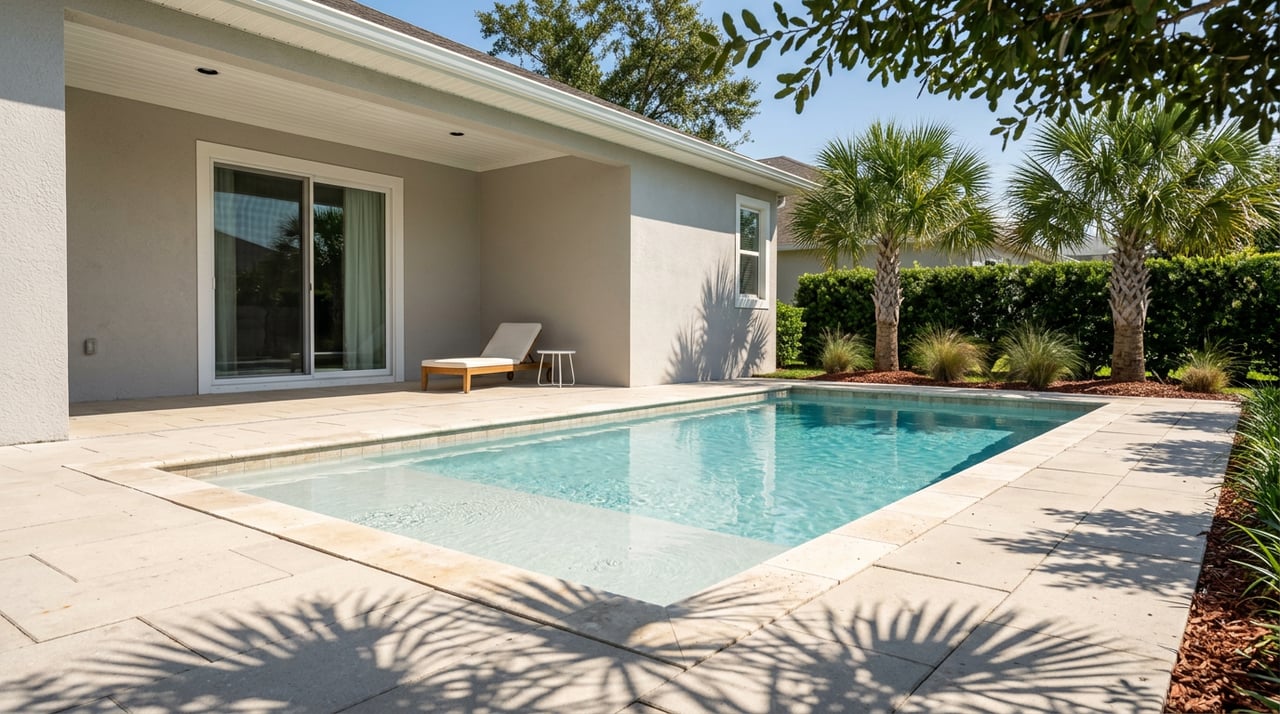
Inland Ponte Vedra Beach neighborhoods, including gated golf and club communities, offer larger lots, garage space, and a simpler maintenance profile while keeping you close to the ocean. Depending on the address, you might trade a 5 to 25 minute walk or drive to the beach for lower exposure to ocean-driven wind, surge, and salt.
Lifestyle can feel resort-like without direct shoreline risk. Many communities feature amenities such as golf, pools, and security. For buyers who want a balance of coastal access and everyday convenience, these neighborhoods are a strong fit.
Inland pros
- Often lower upfront price points compared with oceanfront.
- Potentially lower flood and wind exposure depending on elevation and location.
- Larger yards, more storage, and easier vehicle access.
- Community amenities that deliver a relaxed, club-style lifestyle.
Inland considerations
- No walkout beach access, and daily beach time may require a short drive.
- Fewer panoramic ocean views.
- Some communities have HOA rules that shape exterior changes and rental use. Always confirm these before you buy.
Flood, insurance, and mapping basics
If a property sits in a FEMA Special Flood Hazard Area and you use a federally regulated mortgage, flood insurance is required by federal law and enforced by lenders. That rule applies across the board and is an important part of financing in coastal markets.
FEMA’s Risk Rating 2.0 changed how National Flood Insurance Program premiums are set. Instead of relying mainly on map zones, the system prices policies based on property-specific factors such as distance to water and elevation. Two homes in the same zone can have different premiums, so always request quotes for the exact address rather than assuming a neighborhood average. A trusted agent or insurance broker can help you compare NFIP and private-market options.
St. Johns County participates in FEMA’s Community Rating System. As noted by the county, this designation provides an automatic discount on NFIP premiums for eligible policies effective on or after April 1, 2023. Ask your insurer how the county’s CRS class affects your quote and confirm eligibility for your property.
If you want to visualize long-term scenarios, the NOAA Sea Level Rise Viewer is the standard public tool for exploring local inundation and surge projections. Use it to understand broader context while you evaluate specific properties with your inspector, surveyor, and insurance team.
- Learn more about lender flood insurance requirements in FEMA’s mandatory purchase guidance.
- Review local flood facts and mapping resources, including the Flood Zone Viewer, on St. Johns County’s flood program page.
- Explore scenarios in the NOAA Sea Level Rise Viewer to understand coastal context.
Construction and maintenance: what changes by the coast
Oceanfront homes are more likely to sit in V or VE zones, which triggers stricter engineering. Typical features include open or pile foundations that elevate living spaces, breakaway walls for areas below the base flood elevation, and specialized foundation design to address scour. These elements improve resilience but influence design options, enclosed area limits, and project budgets.
Maintenance also shifts with salt and wind exposure. Plan for more frequent exterior paint or coating cycles, attention to metal fasteners and hardware, durable decking, and periodic dune, boardwalk, or stair work after storms. Ask for recent maintenance records and any coastal permits, and have a contractor with coastal experience estimate annual upkeep so you can budget with confidence.
Shore protection features can affect value and experience. Academic research finds that armoring, such as bulkheads or riprap, can increase property value in some settings because it reduces erosion risk, but it can also bring ecological tradeoffs and regulatory considerations. If you are evaluating a property with armoring, review permits and maintenance history and consult local experts before you decide.
Rental potential and local rules
Rental signals in Ponte Vedra Beach show strong demand across the ZIP, with median asking rents in the mid 3,000 dollar range per month as of late 2025, and higher numbers for homes closest to the ocean. Nightly rates for ocean-facing homes can be much higher than inland options, but actual performance depends on occupancy, season, and community rules.
Short-term rental rules vary by community and can change. Confirm HOA covenants for any neighborhood you consider and check current county requirements for licensing, safety, and tourist development taxes. For a first-pass look at carrying costs on a specific address, use the St. Johns County Property Appraiser’s tax estimator to model ad valorem taxes and potential assessments.
How to choose: a simple framework
Start with what matters most to you day to day, then layer in risk and budget.
- If you want walkout beach access and views, focus on oceanfront or near-beach enclaves along the Ponte Vedra Boulevard corridor. Plan for higher purchase prices, specialized construction, and more maintenance.
- If you want space, amenities, and a simpler maintenance profile within minutes of the beach, target inland club and golf neighborhoods like Sawgrass Country Club and similar areas. You can still enjoy beach time and coastal recreation with a short drive.
- Align your decision with the total cost of ownership. Get property-specific flood and wind insurance quotes early, review flood maps and elevation, and estimate taxes and routine upkeep before you write an offer.
Buyer checklist: oceanfront vs inland
Use this quick checklist as you narrow your search.
- Clarify priorities and price band. Compare recent medians for ocean-adjacent areas like Sawgrass Beach Club with inland club communities such as Sawgrass Country Club to gauge realistic budgets for both paths.
- Run a flood and insurance check before you offer. Use St. Johns County’s Floodplain Facts page to access mapping tools, then request NFIP and private quotes for the exact address under Risk Rating 2.0.
- Verify coastal permits and construction details. If oceanfront, ask for the elevation certificate, foundation design, and any coastal permits. Understand V and VE zone requirements for pile foundations and breakaway walls.
- Budget for maintenance. Ask a coastal-experienced contractor to estimate annual upkeep for exterior finishes, metal components, roofing, decks, dunes, or stairs, and note any seawall or bulkhead maintenance responsibilities.
- Confirm rental and HOA rules. Review HOA covenants for lease terms and restrictions. If rental income matters, compare real-world nightly rates and occupancy, not just list medians.
- Estimate property taxes and assessments. Use the St. Johns County Property Appraiser’s tax estimator to model annual taxes and check for non-ad valorem assessments.
- Explore long-term context. Use the NOAA Sea Level Rise Viewer to understand broader coastal scenarios as you assess property-specific engineering, elevation, and insurance.
Wrap-up
In Ponte Vedra Beach, both paths offer a great lifestyle. Oceanfront delivers the classic coastal experience with premium pricing, specialized construction, and higher maintenance. Inland neighborhoods give you space, amenities, and simpler upkeep while keeping the beach and clubs close. The best choice is the one that fits how you live and what you value.
Ready to compare specific neighborhoods, review flood and insurance details, and tour top options? Connect with Rosanne Hearn for a guided plan tailored to your goals in Ponte Vedra Beach.
FAQs
What is the price gap between oceanfront and inland homes in Ponte Vedra Beach?
- Recent neighborhood medians showed ocean-adjacent areas like Sawgrass Beach Club around 1.775 million dollars versus inland club areas such as Sawgrass Country Club near 762,000 dollars in the same snapshot period, illustrating a meaningful premium for beach proximity.
How does flood insurance work for Ponte Vedra Beach homes?
- If a home is in a FEMA Special Flood Hazard Area and you use a federally regulated mortgage, flood insurance is required, and pricing under FEMA’s Risk Rating 2.0 is property-specific, so request NFIP and private quotes for the exact address and ask how St. Johns County’s CRS discount may apply.
Are beaches in front of Ponte Vedra Beach homes private?
- In Florida, the public generally has rights on the wet sand up to the mean high water line, while dry sand upland may be privately owned, so access depends on public access points, easements, and local management practices.
What construction features should I expect on oceanfront homes?
- Many oceanfront homes in V or VE zones use elevated pile or column foundations with breakaway walls below the living area, and these features improve resilience but can add to construction cost and limit enclosed space below base flood elevation.
Can I use a Ponte Vedra Beach home as a short-term rental?
- It depends on local rules and your HOA; confirm county requirements for short-term rentals, review HOA covenants, and use the county tax estimator to understand tourist taxes and carrying costs before you factor rental income into your plan.